Blog Project

Blog Project

University of Puerto Rico, Rio Piedras Campus
College of General Studies, English Department
English 3135-001, Dr. Cynthia Pittmann
January - May 2016

Thursday, May 5, 2016

Farewell and Adieu (Final Post)

And so, it seems the ink to this virtual paper is running dry. I’ve had a love hate relationship with the experience of writing and in a sense creating this blog. First, It’s hard to accurately express what you feel or are through any medium (art, talking, etc.). Second, it will always feel incomplete because you are limited to the resources at hand and you’re missing that voice that truly makes you yourself. And… I won’t say anymore because even though there were reasons to not feel comfortable putting myself out there, I did enjoy it. Through this virtual journey I forced myself to write more personally and creatively. I discovered that I can motivate myself to begin to write and express myself in a decent and satisfactory manner (we will always be frustrated with what we write, but we have to give ourselves some credit). Not only that, but I discovered the joy of analyzing works; and understanding that even though something might appear to be different on the surface, it can relate to one’s own journey on a very personal level. For example, take JamaicaKinkaid’s A Small Place, in which she criticises the tourist that comes to her native island and doesn’t care for their problems. Even though, not directly the same problems we face here in Puerto Rico, we can relate to the struggle of having people that discriminate towards us and don’t wish to understand our condition (discrimination, debt, corruption, etc.). In the end, I believe a blog is truly personal and I feel that my technical knowledge limited me to truly explore what I could have created. Nonetheless, I enjoyed sharing a part of my person to the world and sharing a part of my journey, which is still very much a work in progress.  

I'll leave you all with some of my favorite films and other random things: 


A childhood favorite


Sunday, May 1, 2016

Is Switzerland Happy? A thought.

What is happiness? Eric Weiner travels looking for answers, for me specifically I observed the notion of happiness when he visited Switzerland. He titles the chapter: “Happiness is Boredom”. This in itself seems to be a confusing notion, but he explains himself. We are all familiar with Swiss perfection whether we refer to its chocolate, it’s punctual trains, government benefits (Health insurance and education), cleanliness and above all, happiness. We always have this place as a perfect comparison: they’re neutral on wars, they have high paying minimum salaries, one of the lowest crime rates, and they rank high on all happiness scales. However, when we read Weiner’s initial impressions we start to comprehend the initial comment about how happiness is boredom. He describes the Swiss person to be uneventful, they lack humor and overall live in a society were everything is regulated and in a sense perfect. additionally, when Weiner asks the Swiss about what it means to be happy they come back to perfect elements of their society (clean toilets, punctual system, etc.).  They seem to find tranquility and bliss in that everything works and that society gives you, but is this happiness? I find this to be essentially contradictory to happiness, as this quote from the Dalai Lama states: “Happiness is not something ready made. It comes from your own actions.”  In this regard, happiness is not something your satisfied or that you find from time to time. The Swiss have a great connection with nature, as Weiner experiences when he visits the alps; but, even he understands that this feeling of bliss is a temporary one and more of peace than of happiness. The Swiss have mastered what Weiner calls conjoyment: “Something more than mere contentment but less than full on joy. “Conjoyment,” perhaps. Yes, that’s what the Swiss possess: utter conjoyment. We could use this word to describe all kinds of situations where we feel joyful yet calm at the same time.”


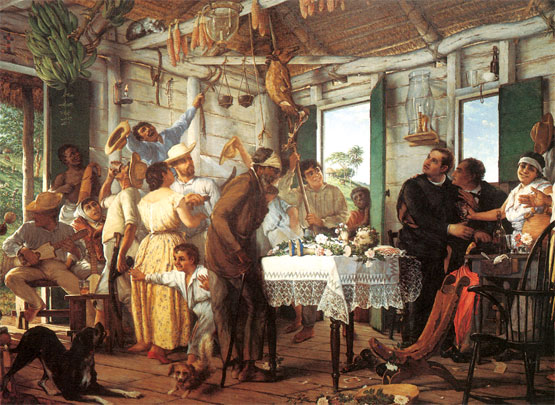
I believe happiness is the expression of working to find something within yourself that lights a fire that nothing can cease. It is euphoric and not placid when encountered. In a sense, I believe that Puerto Ricans, even though we face many obstacles (Extreme crime rates, hurricanes, debt and corruption), we manage to find happiness. Contrary to what many believe the economic situation one faces is not completely enticing of your happiness. Puerto Ricans are fighters and they strive to be better every day whether it entails working harder to push the island forward or just to help out with the family or find your own niche in society. I believe that even though we receive so much bad publicity, moments of joy are found in the small things in our society. For example, random acts of kindness that don’t pay anything back, but they drive the morale. Puerto Ricans have this innate sense of turning bad situations into good ones. For example, if your neighbour loses power, you invite him over or give him power. When you’re invited to a funeral you’re there for that person, but you also celebrate, we’re not shy about this, we celebrate life and we try to find joy. Even if this happiness may cost us more than swiss happiness and seems like it might be sporadic at times, we are proud to fight for that happiness and trying to light a spark to truly be happy, and not just content.  

Here's El Velorio by Francisco Oller


Tuesday, April 26, 2016

Teaching

It's evident that we lack great public education here in Puerto Rico. Don't get me wrong the UPR is great. But, I can testify to knowing how it feels to compare education from PR to that of a decent public school in the US. When I studied at Emory University I could see how my peers were, so eloquent (some, not all), but most of these came from Public schools. And this isn't to say that I couldn't match up, but to know that people could express themselves and be this competitive and attend public school sound surreal to the average puerto rican. 


When we read Jim Cooper's chapter on teaching, I can genuinely feel his frustration on how it seems like an impossible task to teach under a lack of education structure. They had to implement systems throughout the year to try and educate in language (which is not his field; he studied literature), but we see that he tries and solve a problem that is deeply rooted in our way of learning and viewing english. 


English is seen as a privilege as snarky or foreign (high class or as weird; it has a social stigma to speak in english). For example, when people see you speaking in spanish and you switch to english they judge you because they believe you should only speak in spanish (when it's our second language!), and they create a stigma out of it. People who know it hide it, and aren't able to practice because of this stigma and does who don't know it are afraid to ask for the help because they believe they will be made fun of. Nonetheless, there specialized public schools that excel in english and regular public schools that may have better programs, but the typical norm is that if you want to learn english you have to learn it by your own means or attend a private school (and private school is not cheap, by any means). In the end, here we are approximately 60 years after the stories from this chapter are told and we still face an uphill battle, we've made progress, but we still have a long way to go. 

Saturday, April 23, 2016

Life is a Trip


We were tasked with reading the section on Vietnam from the book Life is a trip by Judith Fein. We are recounted the story of a person who was repulsed by the atrocities that had been committed in the Vietnam war, so she traveled to Paris and then to Vietnam to see what had happened and to see how they felt about the war (and Americans).  To her conclusion the people from Vietnam were very forgiving, as they said that it wasn’t their fault. They were forced into the conflict; American and Vietnamese were forced to do whatever it took to survive.


I clearly was not born for this devastating war, but hearing and reading about the conflict you can understand the agony and suffering that troops had to endure. It was a torturous mental game as they had to wait entire nights under horrible conditions (rain, humidity, etc.) and fear of being attacked at any moment. Guerrilla warfare meant that anybody could attack you and you didn’t know who this person might be. Soldiers had to live with guilt of killing innocent civilians as they didn’t know if they would kill them (similar to conflicts in Iraq or Afghanistan were kids would be armed with bombs). The mental devastation alone (aside from serious physical maiming that occurred often due to grenades, traps, etc.) was a lot to bear for a person who was in his late teens and probably drafted (against his will) to attend this hell. It didn’t stop there, when they returned they also had to endure the scorn of people who were against the war who criticized the soldiers for going to Vietnam. To be fair, some went willingly because of their intense patriotism, but I believe that most young soldiers that were drafted did not intend on going off to fight this conflict; however, being put in the situation it was survival to the fittest.

All in all, I believe that the Vietnamese soldiers were very mature in attitude about the whole conflict, they knew that this wasn’t their fault (Soldiers), but more of governments interests (resources, political ideals etc.). They knew that resentment and hate, would not bring back lives, but forgiveness would give new life and new meaning to theirs.


I remember when I was young my grandfather would tell me about his army days (he fought in Korea and had various friends who fought in Vietnam). He told me how he was very patriotic to his nation, but he never wished for anybody to experience what was can do to a person. If he could rule out one thing from American society it would be the militaristic approach to conflict, as it did more self harm than good (PTSD, destruction of families, injuries, etc.).


                                           Click on picture above to see footage from the war