Blog Project

Blog Project

University of Puerto Rico, Rio Piedras Campus
College of General Studies, English Department
English 3135-001, Dr. Cynthia Pittmann
January - May 2016

Monday, March 28, 2016

A Touristy Breakfast

It’s not a foreign concept to my person, as my appearance betrays me. I’m referring to that of being considered a tourist in an island, where the typical stereotype of a foreigner is associated with that of a wondering white blonde with blue eyes. Apparently I fit the bill of a typical “gringo”, which is ironic since I’m completely Puerto rican from my mother’s side and Cuban and Spanish from my dad’s side.
Nonetheless, I had to prepare my performance to be able to encompass the role of a complete “gringo” to actually be "othered" by my own people without their knowledge. Luckily I live near the Condado area, which is probably the epitome of “touristy locations” in Puerto Rico after Old San Juan, so picking my location was easy. I chose my character to be that of a backpacking American who just woke up and went to Pinky’s in front of la concha (since I frequent the one near the hospital) to get some breakfast. I wore flip flops, shorts, a white t-shirt and brought a backpack that was extremely full, with Off and sunscreen on each side of the backpack. It would be an interesting experience as they usually are very lenient and careless when they treat locals, I was curious to
            When I arrived I entered as if I had never seen a sandwich place, appearing to be completely estranged to the notion of ordering a sandwich at Pinky’s. With loud exclamation, the girl at the cash registers quickly called to me: “Excuse me, over here sir!. I approached and asked the woman for a menu, and read the menu in front of her. I could hear some giggles from the kitchen, I assumed it pertained to my appearance of my lack of knowledge. I continued to implore with an intrigued yet frightful face about what were “maduros” and what did the sandwich “porno surfer” consist of. At this moment the woman told me if I’d like to sit down, she was very kind about it. She laughed at the porno surfer question, but she was very calm when explaining how it just included more meat, thankfully the menu was written in English, or this conversation might have taken forever. I just gazed out and through the window overhearing what the people in the kitchen were saying in spanish. At one point I overheard someone say something about “maduros” and the word gringo following thereafter, which was kind of condescending (even if this was an act, I felt empathy toward the casual tourist). Next when the waitress brought me my sandwich I asked about some words I heard a homeless person yell out to a cyclist (obviously I masked my Puerto rican accent). These were insults mostly, but I acted as if I was faintly able to remember them, she kindly acceded to translate, but she did soften one or two of the words (probably trying to not scare me from the Puerto rican people). Side note, while I was eating a local walked in and sat down and nobody came to him for at least 5-6 minutes, which was a little bothering since I was given attention quickly, but I remained quiet as I needed to continue my character. After I was finished with my food I asked for the check, she kindly brought it over and after I had paid she recommended that I should go to Old San Juan, la ventana, el Yunque and to Flamenco beach if I was feeling more adventurous. I thanked her for her kindness and said: “adios” in a crushed up Spanish.

            In the end it just seemed like a very hypocritical experience as I’ve been approached by others as if I were a tourist, but I usually correct them. This experience was enlightening to see that even though it seems that tourists are treated well, they can be “babied” in a way that sets them apart and in some regards made a joke of without their knowing, this being evident by the previously mentioned term: “gringo”. All in all, it was a good meal and a fun experience.

Pinky's:


Sort of what I looked like:

Saturday, March 26, 2016

Life In A Journal


It’s always a challenge to know one’s true self, but I believe that writing is one of the best exercises to do so. However, I was skeptical when I was told that I had to keep a decorated journal, which housed the inner workings of my mind (feelings, adventures, bad jokes, secrets, etc.), but as I began to write something was immediately apparent to me. This was a liberating experience, no matter the day rain or shine, I was able to vent my feelings and what I was going trough day by day without fear of judgement and without the need of company, I was in a way, my own therapist. I will admit that at first it was very hard just to write without thinking, just letting the pen flow, as I have always been taught to be very meticulous with my writing and to proofread (I always cross out errors, it’s practically a tick of mine). But little by little I was able to follow my thoughts with my pen, not as quickly, but I was able to write down most of what I thought about. Earlier writings were very vague as they featured what I did during the day and not much else. But later on, I was able to delve deeper into the inner workings of my mind by finding the jugular in the everyday occurrences of my life. For example, in one entry I was writing about not being able to see LeonardoDiCaprio’s film The Revenant, something that seems very casual. But, then I would connect this film, which gave Leo his Oscar (about time), to my best friend whom I haven’t seen in about a year due to some peculiar circumstances (this was a sad entry, by every means). In the end, I was able to flow with my writing and it helped me derive meaning from the simplest of decisions to more life altering decisions.

Another component of my journal entries was the life compass. This exercise was a quick one, but it was a sort of status update to my current well being. It made me think twice about how I was “balanced” in that space and time. It was interesting to study my mood quickly as it helped me pin point which areas of my self I had to improve for the day. For example, some days I would not sleep enough and I wouldn’t be concentrated in class, which in turn made my mental capacity lower and this would make me anxious and leave less time for me to be spiritually in sync and all of this combined made my emotional side a wreck. However, my average life compass value was a 7.777777778 (which rounds up to an 8) out of 12 which is not bad, but I believe I could have made this better if I would have worked harder on my spiritual self which was proliferated with 1’s. To better this I would have connected more with nature and go more to church to connect with my original religious upbringing. On the other hand, my highest area was my emotional area as I have been very content with my self and my relationship with my significant other. My mental area was my second highest, but it was mostly affected by my physical area which is my third highest (mostly because of lack of sleep and exercising less often).


Legend:

Grey: Emotional
Yellow: Mental
Orange: Physical

Blue: Spiritual

Friday, March 11, 2016

A Small Place by Jamaica Kinkaid


Economy, Government, Corruption and oppression 

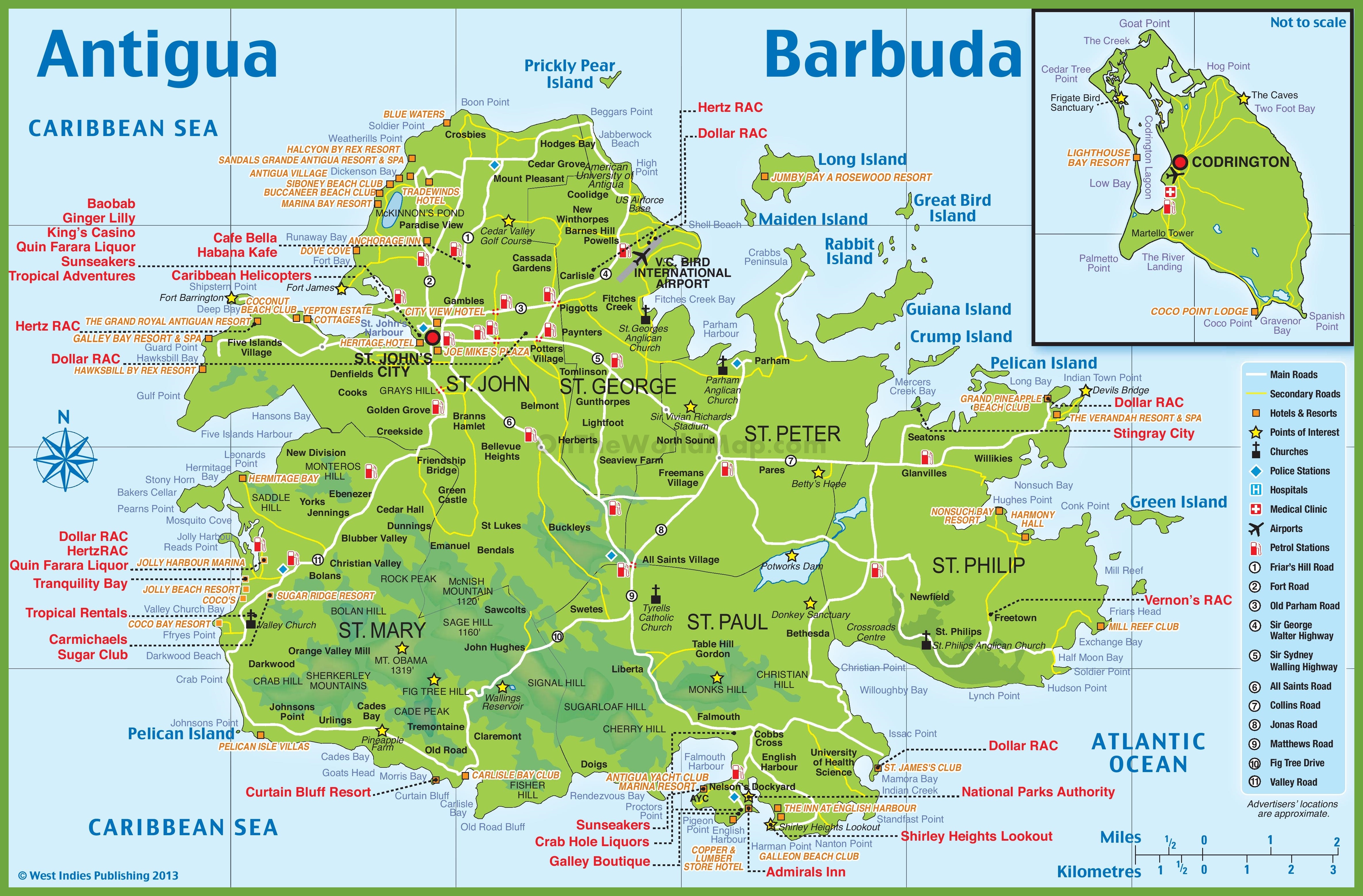
In Jamaica Kincaid’s A Small Place she describes Antigua as an oppressed island. The island is ruled by the prime minister who has a monopoly on the banks (who only give out loans for cars, which he sells) as evidenced by this quote: “You will be surprised, then, to see that most likely the person driving this brand-new car filled with the wrong gas lives in house that, in comparison, is far beneath the status of the car; and if you were to ask why you would be told that the banks are encouraged by the government to make loans available for cars, but loans for houses not so easily available; and if you ask again why, you will be told that the two main car dealer ships in Antigua are owned in part or outright by ministers in government.” (7). Also, educations, healthcare and sanitation are scarce as the government does not invest in these. As a tourist one would not internalise this, but people suffer and people have to deal with constant pressings and struggles which the government does not help with. For example, the government never invested in infrastructure or repairs, if something broke, it would probably be repairing indefinitely.

When comparing to Puerto Rico we can come close when we see how many public funds have been misused and in turn been stolen from the people. Recent corruption in the electric energy agency which bought low grade petroleum which in turn hurt the inhabitants by inhaling pollutants. We have been constantly oppressed with higher taxes and with legislatures that go against the citizens, in this regard we can relate.

Ignorance is bliss

For tourists in Antigua, everything seems to be resolved by assigning the word “quaint” or “different” to their surroundings. When the tourist experiences the sunny weather he doesn’t question if there is extreme draught in the island, he just keeps on going. If the people all drive nice cars, it probably means that the government helps them out. It talks about how life is easy for those who are not invested and how locals hate the tourists because they have the ability to distance themselves from their realities whereas they cannot. This quote exemplifies this thought: “An ugly thing, that is what you are when you become tourist, an ugly, empty thing, stupid thing, piece of rubbish pausing here and there to gaze at this and taste that, and it will never occur to you that the people who inhabit the place in which you have just paused cannot stand you, that behind their closed doors they laugh at your strangeness” (18) and also: “they envy your ability to turn their own banality and boredom into source of pleasure for yourself.”(19)


In Puerto Rico there is a similar situation with tourism as people who come to the island believe that everything is in a great state when they visit the touristy areas and are only advised to go to certain areas or parts of the island (presentable areas). But, they don’t bother to understand why a protest might be going on at the university or at a beach near their hotel. Controversy is not of their concern, only the time they spend on the island to relax themselves is of their concern.

Colonization

“And so everywhere they went they turned it into England; and every body they met they turned English. But no place could ever really be England, and nobody who did not look exactly like them would ever be English, so you can imagine the destruction of people and land that came from that.”(24)  Jamaica Kinkaid has a strong opinion on the English rule over Antigua. Their oppression towards the Antiguan people was of a horrible nature with slavery, racism, exploitation of riches and so on. “Let me just show you how you looked to us. You came. You
took things that were not yours, and you did not even, for appearances' sake, ask first. You could have said, "May have this, please?" and even though it would have been clear to everybody that a yes or no from us would have been of no consequence you might have looked so much better.” (35)


In Puerto rico the issue of colonization has been similar as when the US came we were exploited in the sugar cane fields, our families were drafted for war, medical experiments were made on our people (from which many died), our natural resources have been used as target practice (active mines still remain in vieques, which could explode and do even more damage to the ecosystem), and so on. Not withstanding, we can also see the theme of inferiority as such we are given the status of ELA, but we are not completely independent. This leads to ideologies that make the people believe that it’s impossible to live without our ties to the US, even with all the suffering and injustices that they have caused. A recent example of their lack of responsibility for the “territory” they obtained is with our current debt and not allowing us to restructure it to thrive.

Here are some pictures from my day in Antigua: