In Perter Robert’s
Reading we delve into the what defines our identity. He mentions how our home,
language and culture define us to be part of a “group”, it’s what gives us the
sameness to others in the group. But, it’s the discrepancies within and outside
this sameness that leads us a give ourselves a more satisfying self identity
and to be able to distinguish others who do not form part of this group.
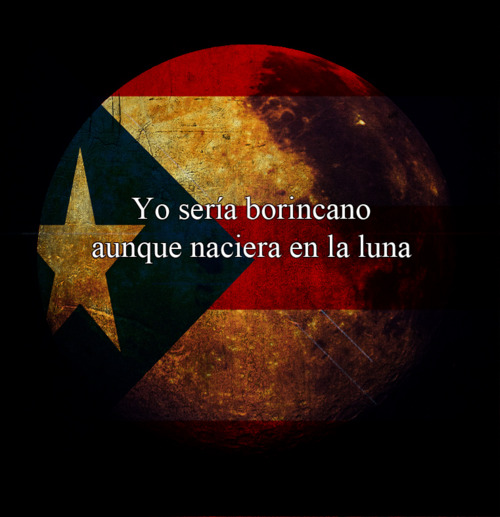
Puerto Rico is an island that is made up of many different people. We were built upon a mix of natives, Europeans, Africans, Dominicans, and other places. However, we have been able to build our own accent, culture and traditions. To the extent that people from all of latin America and in the US are able to distinguish a Puerto rican from a Mexican or a Cuban as our way of being and speaking is so pronounced.
Let’s delve into some
quotes from the reading.
1.“Because the human
being does not necessarily remain in one place through a lifetime, home is
variable and may be place of birth, place of residence or may be defined by the
popular notion 'where the heart is'.”
This is true for many people in Puerto Rico, as we face a lot of migration. In my case I left for the US when I graduated high school to study at Emory University in Atlanta. Nonentheless, I never lost my identity, I would mix since I was a fluent English speaker, but I would always search for the little Puerto rican community in the university and the other latinos that brought me a little closer to where my heart truly was.
This is true for many people in Puerto Rico, as we face a lot of migration. In my case I left for the US when I graduated high school to study at Emory University in Atlanta. Nonentheless, I never lost my identity, I would mix since I was a fluent English speaker, but I would always search for the little Puerto rican community in the university and the other latinos that brought me a little closer to where my heart truly was.
2. “The constant
association with and experience of sameness leads to a recognition of one's own
features as normal and those of others as abnormal/strange/foreign. The best
example of the recognition of identification of difference is with language.
All human beings recognize speakers from outside their community by their
speech, and all those who are different are said, in the case of English
speakers, to have an 'accent', with the implication that the speaker
himself/herself does not have one.”
The puertorican accent is very pronounced (example in hyperlink is overly exaggerated and given an outsiders perspective), however
when you live every day immersed in your group with very similar people you’re
not going to be able to distinguish this. However, when you hang out with
foreign people and they mention you have an accent you’re in disbelief that the
way you speak could be looked upon as if it were different. It’s all about
perspective, we hear Dominicans speak and we know they’re accent is completely
different, but we don’t notice ours unless they make fun of us or explicitly
mention it to us. On another note, within groups of same people, Puerto ricans,
we can make out differences in culture and behavior. For example, people from
more rural parts have different speaking and eating habits, which are
recognizable by just speaking a while with them. This allows us to become more
aware of our own identity and develop who we truly are within our groups.
3. “The naming of
identities may therefore be an evolving process when it is foreigners who are
doing the naming, since initial crude generalizations and mistakes disappears
as foreigners move beyond initially striking primary features, and come to
identify and distinguish secondary or cultural features. Such knowledge is
gained through direct contact with natives through some kind of language
adjustment of purposes of communication.”
This I have seen as
people would generalize as most Spanish speakers to be “Mexicans” (which,
probably appears to be more a generalization/racist attitude). But, once they
understand the difference in locations, people, accent, tradition and culture
they begin to understand the value of comprehending the differences. I’ve had
many friends from the US come to Puerto Rico and leave surprised and enchanted
by the quality of the people, the culture and life that we live.


I couldn't help but picture a small dorm room with Puerto Rican flags on the walls filled to the brim with people eating alcapurrias or mofongo. I honestly don't know how my brain fabricated this image, it seems kinda stereotypical now that I think about it. But you paint a vivid picture in your description of how some people generalize all Spanish speakers into one big lump of Mexicans which while not offensive to some, it does hurt a bit to have your heritage erased like that. I've had people come up to me when they see me speaking in Spanish with my aunt in Florida and tell me to go back to Mexico. But like you said its just a matter of immersing yourself in a new culture and learning how to appreciate the difference in cultures.
ReplyDeleteIt's kinda amazing that we come from such a wide variety of people and have been able to unite our culture and become distinguished from other countries and cultures. We are a very peculiar and unique nation indeed. We sure try to find other people with which we share similar customs and not just when we immigrate but just the simple act of traveling hearing a familiar language or smelling and eating some familiar food can be comforting. Nonetheless, we do try to mix in without losing our past self. I still refuse to believe, only jokingly, that we have an accent no matter what people say. I'd say our Spanish is like the combination of all the others into a nice mellow tone. I do think that people from the city and more rural areas have different customs and I find that if we do have an accent, is the people in the city that have the accent and its the one that others countries attribute to us. Hehehe.
ReplyDeleteIt's nice that you went out of your comfort zone and share moments with people of different nations. Not only that, it's good to hear that you know where your home is no matter where you are. I agree with you with that in Puerto Rico we don't recognize our own accent but when we travel we feel a little judged by it because of a comment or something similar by another person. It happens to all of us and I guess it happens to other people from other nations visiting new places. The important thing is to see what is behind that comment because sometimes it can be misleading to a bad feedback and that's where it starts to be wrong.
ReplyDeleteIt is true, most of the time we don't even notice we have an accent until someone points it out to us. Within our group, we think we speak without an accent but to foreigners we do not; and vice versa, they think they speak without an accent but to us they do. I agree with the fact that Puerto Ricans can distinguish where from the island someone is based on the way they speak, because there are some differences in speech depending on the geographical area.
ReplyDelete